
How are chronic pain and opioid addiction related?
Chronic pain and opioid addiction are related because pain is often where the addiction starts. More than 57% of patients with opiate addiction said chronic pain was why they started using opiates. Both are shaped by genes and surroundings. Both often need treatment on many fronts at once.
More than 30% of Americans have some form of acute or chronic pain.

More than 57% of patients with opiate addiction had chronic pain as the reason to start using opiates.
How did the opioid epidemic start?
Opioid prescribing began to rise in the early 1990s, powered by financial incentives aligning with intrinsic hedonic behavior.
It started as a push by cancer doctors and pain doctors to fix the undertreatment of pain. Pain relief was added as a measure of good care. But this tool was highly subjective and built to please the customer. It ignored the deep mental forces that drive substance use disorder.

Then the capitation model took hold. Insurers paid a flat fee per patient, and pain care shifted to primary care doctors. They were paid to handle more and more complex, hard patients on their own. But they lacked tools to treat pain without pills. They could not spot pills being diverted or misused. And they were paid to see patients less often.
At the same time, in 1996, came OxyContin, a strong time-release form of oxycodone. The drug company Purdue Pharma marketed it to doctors in a deceptive way. The core problem: OxyContin was sold as a 12-hour long-acting drug with low abuse potential. In fact, it worked for only 8 hours.
The first version could be easily crushed and snorted. That gave a high much like injected heroin, with no track marks. The second problem: high levels of outside opioids, day after day, turned down the body’s own endorphin system. Patients became dependent on the pills. They no longer felt normal without OxyContin. They quickly raised their doses to get the same pain relief. And a system that graded care by customer-rated pain relief rewarded it.
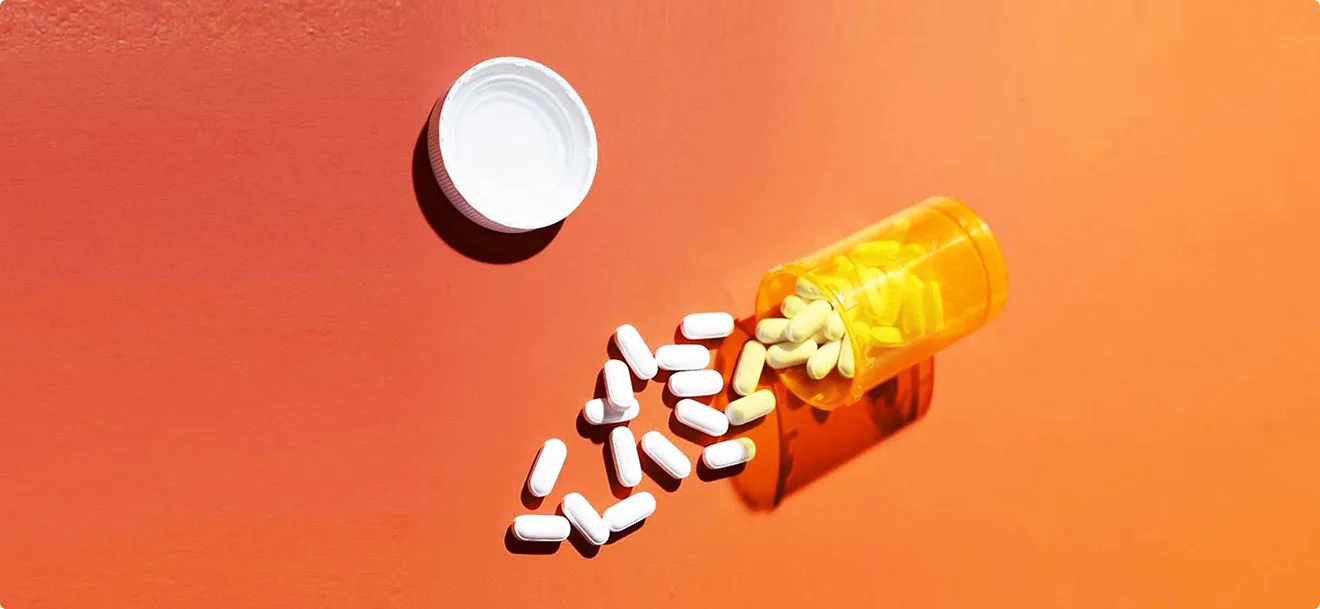
OxyContin 80 milligrams became a magnet for people misusing opioids. With a street value of $1 a milligram, OxyContin became a local currency. By 1999, pills were flowing into the black market in Maine and rural Appalachia. Pills were stolen from medicine chests, dealt on the street, and sold in cash-only pill mills.
Between 1999 and 2011, the CDC tracked a fourfold rise in overdose deaths tied to prescriptions. In 2011, the agency officially declared “prescription painkiller overdoses at epidemic levels.” On charts, the data were simple. Deaths climbed in step with opioid prescribing. But the forces behind the trend were not simple.
Starting around 2010 or 2011, several events made prescription pills harder to get. Police cracked down on pill mills. The maker of OxyContin made the pill harder to crush. Doctors tightened their prescribing. More states built prescription registries to catch “doctor shopping”—that is, getting prescriptions from several doctors at the same time.

People who misused opioid pills moved to heroin, mainly because it was cheaper and easier to get than prescribed opioids. Several years later, street fentanyl, 50 times as strong as heroin, drove the death toll even higher. Click on the following links to know more: Link 1 and Link 2.
What did we get wrong about the opioid epidemic?
Only 22 to 35 percent of “misusers” of pain medication report receiving the drugs from their doctor, according to the Substance Abuse and Mental Health Services Administration.
(Misuse means anything from one extra pill past what the doctor ordered all the way to full-blown addiction.) About half got pain pills from a friend or relative. Others stole or bought pills from someone they knew. Some bought from a dealer. Some went looking for a doctor who would write prescriptions.
People who misuse pills are rarely new to drugs. Take the federal government’s 2014 National Survey on Drug Use and Health. It found that more than three-fourths of misusers had used benzodiazepines without a prescription, such as Valium or Xanax, or inhalants. A study of OxyContin users in treatment found that they “were not naive individuals with accidental addictions who were introduced to painkillers by their physicians as reported by the media…[instead they had] extensive drug use histories.” Click on the following links to know more: Link 1 and Link 2. Among people who are prescribed opioids, addiction is fairly rare. The share of chronic pain patients who become addicted to opioids is in single digits. Studies show rates from under 1 percent to 8 percent. Most estimates fall toward the low end once you remove people at risk. That means people with a history of substance use or, to a lesser but real degree, mental illness at the same time. Click on the following links to know more: Link 1 and Link 2. The focus on prescriptions is the main problem. Policymakers of all kinds have embraced it, from lawmakers to pharmacy benefits managers.

The hard push to rein in prescribing cut opioid prescriptions across the nation by one-third between 2012 and 2017. But overdoses did not drop. Many of them were driven by fentanyl brought in from abroad.
Prescribing controls are well justified. Too many doctors and dentists over-prescribe as a habit. Some hand out a month’s supply of pills when a few days’ worth, if any, was needed.
There is little doubt that the more drugs a community has, the more they will be used. Were drug companies responsible sellers? What did the DEA and distributors know, and when did they know it? These supply-side questions need answers. But cutting supply does little to the person on the demand side who can buy cheap street fentanyl.
Sadly, the blunt pill-control rules set by insurers, pharmacies, and regulators hurt chronic pain patients. Many of them had been doing well on prescription opioids.
Prescribers felt Drug Enforcement Administration agents, their state medical boards, attorneys general, and other health care agencies breathing down their necks. So they cut patients’ doses or stopped them cold. That left patients in misery. They could not find another doctor to treat them, and some thought about suicide.
The addictive potential of drugs is not random.
Exposure to a drug is needed for addiction to develop. But exposure is almost never enough. Addiction is a moving process. It depends on how someone is suffering and what they are living through. Under those conditions, a drug will either be deeply seductive, or it won’t.
How is chronic pain treated when you also have an addiction?

Our pain management program is built for people in recovery. We use as few drugs as we can and focus on safe, effective pain relief. We keep working with each patient to find, treat, and track the root causes of pain. We do not just mask the nerve, muscle and bone effects of an injury or illness. Addiction too often creeps in as a result of pain care, and we intend to break this cycle.
Contact us and talk to our staff about your situation. Then book a visit with one of our pain doctors who focus on recovery. We accept people in a recovery program now, people who have finished treatment, and people just starting treatment. We also accept people who do not need addiction care but want a more careful approach to pain.

Both are mediated by genetics and environment.
Both may have significant behavioral components.
Both may have serious harmful consequences if untreated.
Both often require multifaceted treatment.
For too long we have treated clients struggling with opiate addiction and chronic pain. Their choices are often narrow. They can stay dependent on opiate pain pills, or they can learn to live with pain every day. That is why we started a pain management program for people who also struggle with addiction. It also serves people who want a more conservative approach to pain care. Clients will not find an opiate-centered practice in our care. Our program is run by pain management physicians who understand addiction and what it means for chronic pain care.
Can chronic pain be treated without opioids?

Your chronic pain may start in your back (cervical, thoracic or lumbar spine) or your joints (knees, hips, elbows). You may have cluster headaches or chronic migraine headaches. Either way, we offer targeted procedures for fast and lasting pain relief without opioids.
We specialize in medication assisted therapy for opiate addiction in patients who also have chronic pain. We are an outpatient clinic. We help patients through recovery from addiction and treat their pain at the same time.
Opiate addiction and chronic pain together can drag down quality of life and a person’s sense of well-being. We offer a thorough evaluation and a treatment plan built for you. The goal is to help you reach and keep your best recovery from addiction, chronic pain or both.
Many patients have both chronic pain and addiction to medication. Both conditions need specialized treatment.
Pain is a complex issue
The real issue is boredom and loneliness. Opioids are a short-term cure for boredom.
Measuring pain with a subjective tool built to please the customer guarantees that some pain patients will misuse their drugs.
Trying to fix an economic problem by cutting supply is unlikely to solve a demand problem.
It’s not the drug that’s the problem. It’s the supply of the drug, used by a person who believes it gives an instant reward. In their mind, that reward is far bigger than the instant risk. It’s more about the cage the animal is in, whether it’s economic, psychological, or social.

Frequently asked questions
Can addiction be used as a coping mechanism?
Yes, and that is the heart of it. The real issue is often boredom and loneliness, and opioids are a short-term cure for boredom. Exposure to a drug is needed for addiction to develop, but exposure is almost never enough. Whether a drug becomes seductive depends on how someone is suffering. It also depends on the life they live, whether economic, psychological or social.
Which pain killers are highly addictive?
Opioids are the pain pills behind the epidemic. Time-release oxycodone (OxyContin) is the best-known example. Its first form could be crushed and snorted for a heroin-like high. Still, the addictive potential of a drug is not random. Among people prescribed opioids for chronic pain, addiction is rare, in single digits. Most of that risk sits with people who have a history of substance use.
What are the psychological impacts of chronic pain?
Chronic pain can wear down quality of life and a person’s sense of well-being, even more when opioid addiction is added. Some patients were doing well on prescription opioids and then had their doses cut or stopped. They have been left in misery, unable to find another doctor, and sometimes thinking about suicide. That is why pain and addiction have to be treated together.
What should you do if you’re discharged from pain management?
Call us and talk to our staff about your situation. Our pain program is run by doctors who understand addiction. We accept people in recovery and people starting or finishing treatment. We also accept people who just want a more careful approach to pain, without opioids. You will get a full checkup and a treatment plan built for your pain, your recovery or both.
Sources
- Vowles KE, McEntee ML, Julnes PS, et al. Rates of opioid misuse, abuse, and addiction in chronic pain: a systematic review and data synthesis. Pain. 2015;156(4):569-576. PMID 25785523 · DOI 10.1097/01.j.pain.0000460357.01998.f1.
- Volkow ND, McLellan AT. Opioid abuse in chronic pain: misconceptions and mitigation strategies. N Engl J Med. 2016;374(13):1253-1263. PMID 27028915 · DOI 10.1056/NEJMra1507771.