Summary: Some people experience greater pleasure by eating food than others. Thus, these individuals are more likely to consume excess calories. Dopamine pathways are known to be associated with addiction and the consolidation of memories. However, studies show that food addiction is more complex with the involvement of various other pathways. The new studies show that two overlapping mechanisms that are opioid and endocannabinoid systems, play a vital role in food addiction. PET scan of the brain confirms lower expression of MOR receptors in those consuming excessive food. However, it appears that the effect of the endocannabinoid system on appetite is more varied. Thus, researchers propose that targeting the opioid system could be one of the ways of managing eating disorders.

Excessive energy intake leads to obesity. However, eating disorders also increase the risk of numerous other disorders. It appears that obesity and related disorders have lots to do with how people control their urge to eat food. Obese individuals often consume more calories. They have a greater hunger due to hormones and certain peculiarities of the central nervous system.

Dopamine pathways are long known to play a central role in addiction, pleasure-seeking behavior. Thus, researchers think that dopamine also plays a role in food addiction. Overconsumption of food leads to a greater dopamine response. Dopamine also has a role in the consolidation of these memories. Thus, people living with eating disorders are more likely to be tempted to increase their dopamine by consuming more food1.

A new study confirms the role of opioid and endocannabinoid systems in eating disorders, too
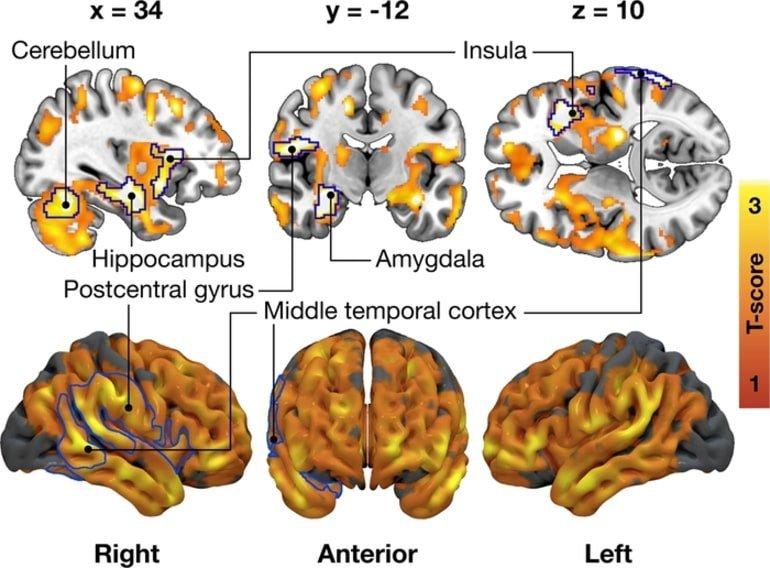
This shows neuroimaging of brain regions

Figure 1 Activity of opioid system in various brain centers associated with eating disorders

It seems that targeting dopamine may help, but not in all cases. Thus, it became evident that there must be other pathways involved in an eating disorder, too. Therefore, researchers started paying attention to two of the overlapping systems that are opioid and endocannabinoid systems.

Early studies and experiences with cannabinoids show that they may influence appetite in a complex manner. For example, cannabis extracts are known to be potent appetite modifiers, with some cannabinoids stimulating the appetite, while others rather suppressing2.

Similarly, researchers have noticed abnormalities in the levels of endogenous opioids like endorphins in those with eating disorders. Again, these changes are similar to those found in people addicted to various substances3. Further, like cannabinoids, experience shows that opioid use can also modulate appetite and alter eating behavior.


With the advances in imaging technologies, it is now possible to visualize the activity of various pathways in the brains of individuals. Thus, in the new study, researchers analyzed the activity of μ-opioid receptors (MOR) and cannabinoid CB1 receptors (CB1) in various brain centers in healthy subjects. At the same time, they analyzed their eating habits with the help of the Dutch Eating Behavior Questionnaire (DEBQ). This study was done by researchers at the University of Turku in Finland4

For analyzing the activity of MOR receptors in different brain centers, researchers used carfentanil PET scans from 92 healthy subjects. And for understanding the activity of CB1 receptors, they used FMPEP-d2 scans from 35 adults.

The study demonstrated that individuals with low expression of MOR receptors were more likely to consume more calories. On the other hand, changes in CB1 receptors were associated with more varied eating disorders.

Thus, the study confirmed that both the opioid and endocannabinoid pathways have a vital role in regulating eating habits. In addition, these pathways play a crucial role in food reward pathways. Moreover, the study could also demonstrate a considerable overlap between the two pathways. Nevertheless, the role of these two pathways is distinct in controlling eating behaviors.

Therefore, the study shows that one of the novel ways of managing eating disorders could be targeting the opioid receptors in the brain. Although, researchers remain less clear about targeting CB1 receptors for managing eating disorders.

This insight also underscores the complexity of the brain’s reward system, which is similarly implicated in opioid addiction treatment, where managing cravings and dependencies often involves targeting these receptors to help restore balance in the brain’s chemistry.

References

1. Botticelli L, Micioni Di Bonaventura E, Del Bello F, et al. Underlying Susceptibility to Eating Disorders and Drug Abuse: Genetic and Pharmacological Aspects of Dopamine D4 Receptors. Nutrients. 2020;12(8):2288. doi:10.3390/nu12082288

2. Marco EM, Romero-Zerbo SY, Viveros MP, Bermudez-Silva FJ. The role of the endocannabinoid system in eating disorders: pharmacological implications. Behavioural Pharmacology. 2012;23(5 and 6):526-536. doi:10.1097/FBP.0b013e328356c3c9

3. Lienard Y, Vamecq J. [The auto-addictive hypothesis of pathological eating disorders]. Presse Med. 2004;33(18 Suppl):33-40. doi:10.1016/s0755-4982(04)72380-5

4. Kantonen T, Karjalainen T, Pekkarinen L, et al. Cerebral μ-opioid and CB1 receptor systems have distinct roles in human feeding behavior. Transl Psychiatry. 2021;11(1):1-9. doi:10.1038/s41398-021-01559-5


Alcohol is the most commonly consumed mind-altering substance in the world. Unlike other drugs, its consumption is legal. As a result, it is the most widely served mind-altering substance served in social events1,2.

Alcohol is so widely used and readily available beverage that many people do not realize it is a drug with well-known pharmacology. It is a potent central nervous system (CNS) depressant, quite like opiates and barbiturates. 

However, people often become excited after moderate alcohol consumption, as inhibitory neurons are more sensitive to alcohol. However, at higher dosages, it suppresses all brain activities.

Alcohol can also provide some energy. However, the body cannot store that energy. Therefore, it will cause a mild anxiolytic effect at a lower dosage and uplift mood.

Metabolism of alcohol in the body

Like any drug or medication, alcohol cannot stay in the body forever and is gradually metabolized. In the human body liver is the main detoxifying organ that needs to work overtime to get rid of alcohol, especially when consumed in large amounts.

For individuals struggling with overconsumption, alcohol addiction treatment can provide essential support and resources to help reduce dependency and promote healthier liver function.

Alcohol is mainly metabolized with the help of oxidation, and an enzyme called alcohol dehydrogenase plays a central role in its metabolism. Although, the P450 pathway also plays some role in neutralizing alcohol in the body1,2.

Generally, the lean body metabolizes alcohol faster. Thus, women or underweight men metabolize it faster. However, there are substantial individual differences in alcohol metabolism. Some may metabolize it quite quicker, others much slower. The total individual difference could be as much as five times.

Other factors that affect how efficiently the liver metabolizes alcohol are age, race, food intake, biological rhythms, and exercise.

Certain drugs can also inhibit alcohol metabolism and thus cause severe nausea and intoxication when used along with medications. Such medicines also have a role in treating alcohol addiction.

Signs of alcohol detoxing in the liver – early and late symptoms

Fortunately, the human body is quite good at clearing alcohol from the body. Although the body starts getting rid of alcohol almost immediately after it starts circulating in the blood, its complete removal from the blood is a much longer process.

Once the early phase of alcohol intoxication is over, there is an accumulation of specific metabolites. Thus, after about 10 hours of alcohol consumption, the human body starts showing signs of detoxification. Some of the early signs are nausea and abdominal pains. However, a bit later, psychological symptoms begin to appear.

The next day, a so-called “hang-over” ensues, which is characterized by fatigue, body aches, headaches, dehydration, problem in focusing. It is because the body is working hard to remove all the toxins and unrequired chemicals from the body. However, during this period of intense detoxification, there is a considerable decline in mood and coordination.


As the body works hard to detoxify, its temperature may also rise slightly. As a result, a person may start feeling bad and anxious. This phase is quite critical because the person is tempted to drink alcohol to get rid of pain and anxiety during this phase. Avoiding alcohol in this phase requires tolerating pain and high willpower.

There are some late signs of abstinence, too. Though these signs are much milder, nonetheless, they are there. People continue to feel agitated for 3-4 days, with higher anxiety levels. There is an intense craving for alcohol. Those who consume alcohol in large amounts or are dependent on it may also experience hallucinations during this phase. Additionally, tremors may also be a problem.

Top 10 signs that body is detoxing from alcohol

  1. Nausea due to intoxication by alcohol metabolites
  2. Vomiting both due to intoxication and stomach irritation
  3. Anxiety and feeling of unease
  4. Tremors as a sign of neurological changes
  5. Confusion
  6. Headaches, often throbbing
  7. Confusion and difficulty in focusing
  8. Insomnia and changes in sleep pattern
  9. Restlessness
  10. Changes in heart rate and blood pressure


The above signs occur in most people, though they might be more severe on chronic alcohol abuse, especially at higher dosages. Further, it is worth noticing that signs may differ in those dependent on alcohol. 

Prolonged alcohol dependence has signs like:

  • Mood disorders and depression
  • Weakening of heart muscles or cardiomyopathy
  • Hormonal changes in the body
  • Increased risk of stroke
  • Liver cirrhosis due to prolonged liver damage
  • Suicidal thoughts


Alcohol dependence can be treated, and the severity of signs of its withdrawal can be reduced. Therefore, most people do not need special care. 

Nevertheless, studies show that about 25% of adults in the US abuse alcohol. Additionally, it is worth understanding that alcohol is one of the leading causes of preventable deaths in the US. Studies show that about 100,000 people die each year due to alcohol abuse, and there are millions of emergency department visits3.

To conclude, alcohol is a commonly used mind-altering drug. It is legal and relatively safe when consumed responsibly. However, abusing alcohol may cause effects similar to drug addiction. It may harm health, and detoxification is a prolonged and painful process in many cases.

References

1. Wallner M, Olsen RW. Physiology and pharmacology of alcohol: the imidazobenzodiazepine alcohol antagonist site on subtypes of GABAA receptors as an opportunity for drug development? Br J Pharmacol. 2008;154(2):288-298. doi:10.1038/bjp.2008.32

2. Cederbaum AI. ALCOHOL METABOLISM. Clin Liver Dis. 2012;16(4):667-685. doi:10.1016/j.cld.2012.08.002

3. Alcohol Facts and Statistics | National Institute on Alcohol Abuse and Alcoholism (NIAAA). Accessed February 26, 2022. https://www.niaaa.nih.gov/publications/brochures-and-fact-sheets/alcohol-facts-and-statistics

Summary: People living with opioid addiction often report a greater degree of childhood trauma. However, it is still unclear if adverse childhood experience is really a risk factor. The new study shows that those with childhood trauma have altered brain pathways. It means that they are more likely to experience pleasure after a dose of morphine when compared to adults with no childhood trauma. Further, the experimental study found that childhood trauma has no impact on the pain-relieving action of opioids.

In the US, addiction and misuse of legal drugs and related deaths have exceeded the abuse of illicit drugs. Studies show that in 2019 more than 50 000 people died of opioid overdose. What is alarming is that almost one-third of all people prescribed opioids for pain tend to abuse it1.

Nonetheless, two-thirds of people never seem to abuse opioids, even on prolonged use. So, it means that there must be some difference between individuals who abuse and those who do not. It seems that it may have to do something with adverse experiences during childhood.

These findings highlight the importance of targeted opioid addiction treatment strategies that address both the physical and psychological factors contributing to addiction, especially for those with a history of childhood adversity.

Numerous studies have shown that even minor childhood trauma may alter the brain’s responses to various stressors. For example, children who received less attention during childhood are at greater risk of developing anxiety during adulthood. In addition, during early trauma, the brain responds quite differently to stressors for the rest of life2.

Earlier studies have shown that those addicted to drugs are more likely to be individuals with childhood maltreatment or abuse. In addition, many studies compared individuals addicted to various substances to healthy adults. Most studies show the presence of greater severity of childhood trauma in those addicted to substances3.

The new experiment provides strong evidence that childhood trauma may alter responses to opioids

This study differs in the way that it was carried out in 52 healthy adults. None of them was addicted to opioids. Researchers divided them into two groups. The first group consisted of 27 individuals with a history of severe childhood trauma. The second group consisted of 25 individuals with no childhood trauma4.

In the experiment, both the groups were given an injection of morphine. Then researchers used a well-known scale to measure the feeling of high or pleasure each one got from morphine injection. To the researcher’s surprise, individuals with childhood trauma had a much greater liking for morphine compared to those who did not have any childhood trauma. Not only that, morphine was more likely to cause nausea and dizziness in those without childhood trauma.


This study shows that childhood trauma results in changes in the brain, which alters a person’s response towards opioids. Those with painful childhood are more likely to enjoy the euphoric effect of opioids.

Researchers think this difference could be due to changes caused in the endogenous opioid system by the early trauma. This system is also sensitive to natural endorphins (hormones of happiness) and natural opioids. However, in those with childhood trauma, this pathway is less sensitive. Thus, high-dose morphine causes pleasure but not side effects.

On the contrary, the endogenous opioid system is highly sensitive to endorphins and natural opioids in those with a happy childhood. Thus, they are not able to tolerate high doses of opioids like morphine well.

Interestingly enough, it seems that childhood trauma only alters the high or experience of pleasure. However, it does not have any impact on the pain-relieving properties of morphine. 

In the experiment, researchers also asked individuals from both groups to submerge their hands in cold water. They noted how long it took for each individual to pull their hands out due to pain. They found that there was not much difference between the two groups. Thus, the painkilling action of morphine is preserved and has no association with childhood trauma.

References

1. Abuse NI on D. Opioid Overdose Crisis. National Institute on Drug Abuse. Published March 11, 2021. Accessed October 30, 2021. https://www.drugabuse.gov/drug-topics/opioids/opioid-overdose-crisis

2. Gabor Maté MD. Addiction: Childhood Trauma, Stress and the Biology of Addiction. Journal of Restorative Medicine. 2012;1(1):56-63. doi:10.14200/jrm.2012.1.1005

3. Garami J, Valikhani A, Parkes D, et al. Examining Perceived Stress, Childhood Trauma and Interpersonal Trauma in Individuals With Drug Addiction. Psychol Rep. 2019;122(2):433-450. doi:10.1177/0033294118764918

4. Carlyle M, Broomby R, Simpson G, et al. A randomised, double-blind study investigating the relationship between early childhood trauma and the rewarding effects of morphine. Addiction Biology. 2021;26(6):e13047. doi:10.1111/adb.13047

Summary: Depression is one of the most prevalent mental disorders. It has a high prevalence in affluent societies. Researchers have been struggling to explain its high prevalence among people living in abundance. New studies show that a higher rate of depression in such individuals could be due to the consistently pleasure-seeking behavior of these individuals. It appears that gadget addiction is only making things worse. Thus, many people in western society seem to be drowning in dopamine. Prescribing anti-depressants to such individuals may not be the right way to manage depression in such people.

Till the mid of the 20th century, conditions like anxiety and depression were rare. However, nowadays, depression is the most common health disorder. Moreover, unlike a century back when depression was more common in low-income individuals, now it is much more common in high-income nations.

Studies show that about 350 million individuals are living with depression. It is widely prevalent in high-income economies like North America and West Europe. This has perplexed researchers a bit. It is evident that major depression is quite common among people with abundance and seemingly not having many problems in life. Depression-related suicides among highly successful people are not a secret1,2.

Figure 1 higher prevalence of depression in sections of the western world may be explained by greater addiction to gadgets stimulating dopaminergic pathways

Experts think they have found the reason for the higher prevalence of depression among individuals with high income and relatively few serious problems in life. They believe that it is due to addiction caused by engaging too much in pleasurable activities. Further, it seems that digital addiction is one such activity3.

Till the mid of the 20th century, word addiction was mostly associated with illicit drugs or substance abuse. However, these days people are addicted to many other things like mobile phones, gadgets, screens, and even sex. These seemingly benign addictions appear to be causing severe depression.

Experts think that, to a degree, a higher prevalence of depression is the result of abundance in the western world. Thus, people with a loving family, high education, and high economic status engage more frequently in pleasure-seeking behavior. It means that their reward pathway is consistently active.  Unlike the olden days, when life was full of struggles and pleasures were rare.


It means that the brain in modern people struggles to recover from pleasure. As in the brain, pleasure and pain are processed by the same part, yet they both have opposing mechanisms. The presence of pain helps the brain maintain its balance. However, in the absence of pain, the brain struggles to achieve this balance.

A high level of dopamine or overstimulated dopamine receptors provides pleasure, but this pleasure cannot last long. It is often followed by a withdrawal syndrome causing anxiety, irritability, insomnia, and other mental health issues. A person tries to overcome this withdrawal syndrome by going back to the source of pleasure.

In the case of digital addiction, signs of euphoria and withdrawal syndrome might be less vivid than those related to substance addiction. Nonetheless, they are there. It means that a person starts using these digital platforms more and more to avoid withdrawal syndrome. Ultimately, even greater use of digital platforms or spending time in the front of the screen stops helping. It is when anxiety and depression start occurring.

Experience shows that limiting screen time and controlling digital addiction may be better to counter anxiety and depression rather than using anti-depressant drugs.

Thus, experts recommend that people should start reducing the time they spend with gadgets, in front of the screen, or playing video games. It is generally difficult due to craving, which is very similar to one that occurs in people living with substance abuse. However, once the person can reduce consumption of digital technology, it becomes easier to control the urge, and the brain starts regaining its balance.

Limiting the consumption of digital technology and healthier dopamine balance in the brain means that people can again start enjoying the activities they used to. Thus, reducing the risk of mental disorders like anxiety and depression.

References

1. Lim GY, Tam WW, Lu Y, Ho CS, Zhang MW, Ho RC. Prevalence of Depression in the Community from 30 Countries between 1994 and 2014. Sci Rep. 2018;8(1):2861. doi:10.1038/s41598-018-21243-x

2. Liu Q, He H, Yang J, Feng X, Zhao F, Lyu J. Changes in the global burden of depression from 1990 to 2017: Findings from the Global Burden of Disease study. Journal of Psychiatric Research. 2020;126:134-140. doi:10.1016/j.jpsychires.2019.08.002

3. Bhattacharyya R. Addiction to Modern Gadgets and Technologies Across Generations. Eastern Journal of Psychiatry. 2015;18(2). Accessed October 24, 2021. http://easternjpsychiatry.org/index.php/about/article/view/42

Summary: Cocaine is a potent stimulant and a substance of abuse. However, contrary to common belief, it causes severe addiction only in 20% of the users. Thus, researchers knew that the brain of 20% of individuals must be lacking some counteracting mechanism. Early studies on addiction have confirmed that the dopamine reward pathway plays a vital role in addiction. Accumulation of dopamine in specific parts of the brain causes the high and plays a role in the consolidation of memory of these experiences. In the new study, researchers found that serotonin helps counter addiction caused by dopamine accumulation. Furthermore, they found that dysregulation of serotonin in some individuals makes them prone to addiction. It means that correcting this serotonin dysregulation may help overcome addiction.

Unlike common belief, studies show that just 20% of regular cocaine users get addicted. Of course, most have psychological dependence, but very few of them have so-called physiological dependence1.

Psychological dependence is one when a person frequently abuses a particular substance as it brings pleasure. However, a person can give up that substance without many health issues. On the other hand, in physiological dependence, one may have severe withdrawal syndrome, sometimes making it almost impossible to give up substance of abuse.


The central role of dopamine and dopaminergic pathways in addiction is well known. Dopamine is a hormone responsible for controlling the activity of brain neurons. Thus, if a person is in a low mood, the mild dopamine release helps stimulate the brain and uplift the mood. Cocaine causes euphoria or high by promoting the buildup of cocaine in certain parts of the brain2.

Among various brain centers, the limbic system plays a particularly important role in the development of addiction. As limbic system contains vital memory centers like the hippocampus and amygdala that help people remember what brings pleasure. Moreover, the limbic system is rich in dopamine-producing cells2.

Figure 1 Cocaine addiction, the role of dopamine and various brain centers2


In all human body systems, the balance is maintained with the help of two opposing systems. Thus, in the autonomic system, sympathetic nerves may stimulate the heart, and parasympathetic may calm down the heart. Similarly, there are stimulatory and inhibitory neurons. Thus, researchers knew that brain must be having some opposing mechanism to counter the excitatory effect of dopamine on various brain centers.

In some early experimental studies, they found that serotonin helps minimize various dopamine effects. Dopamine drugs are already being used to help people with a withdrawal syndrome. Now researchers think that adding serotonin-increasing medications to treatment may also help counter the urge to use substances and overcome addiction3. This dual approach might counter the urge to use substances, providing a more comprehensive opioid addiction treatment.

Researchers experimented on mice to understand how serotonin may help counter the addictive actions of cocaine and neutralize specific ill effects of high dopamine. First, they taught mice to start consuming cocaine, but after taking cocaine, they were punished by giving an unpleasant electric current. At the end of the study, researchers found that 80% of mice stopped taking cocaine, and quite like humans, 20% continued despite the unpleasant effects of electric current.

Further, they repeated the experiment in which there were issues with serotonin transporter, and they found that in that particular group far more, that is 60% of mice got addicted. However, they also saw that if they administered serotonin to these mice, the addiction rate again fell to 20%. Thus, the experiment proved that serotonin is one of the major neurotransmitters that help prevent addiction1.

When a person consumes cocaine, there is an increase in dopamine in certain brain parts, causing a high and feeling of pleasure. Unfortunately, this experience is remembered by the limbic system, resulting in repeated cocaine abuse. However, serotonin acts as a natural balancer. It helps prevent the consolidation of these experiences in the brain. It means that therapies targeting serotonin may help prevent or overcome addiction in a large number of cases.

Researches

1. Li Y, Simmler LD, Van Zessen R, et al. Synaptic mechanism underlying serotonin modulation of transition to cocaine addiction. Science. 2021;373(6560):1252-1256. doi:10.1126/science.abi9086

2. Nestler EJ. The Neurobiology of Cocaine Addiction. Sci Pract Perspect. 2005;3(1):4-10.

3. R.B. R, B.E. B, M.H. B. Dual dopamine/serotonin releasers: Potential treatment agents for stimulant addiction. – PsycNET. Experimental and clinical psychopharmacology. Published online 2008. Accessed October 16, 2021. https://psycnet.apa.org/doiLanding?doi=10.1037%2Fa0014103

Summary: People often use substances like tobacco and marijuana for pain relief, especially when living with chronic pain. However, a new study shows that concurrent use of tobacco and marijuana for pain relief may worsen their pain in the long run, making individuals more sensitive to the pain.

One of the new studies by Duke University School of Medicine found that using marijuana and tobacco can rather make pain worse. It may significantly increase the risk of chronic pain later. Even if these substances seem to help initially, they do not seem to be a good choice in the long run, especially when both substances are used.

Of course, these findings are worrisome in multiple ways. Although tobacco use is not increasing in the US, marijuana use is. It means that there are now greater chances that many people living with chronic pain may use both these substances regularly.

Further, researchers have noted that in recent years, cannabis has been popularized as one of the ways for pain management. However, researchers warn that evidence in favor of using marijuana for chronic pain is slim. Even if some study shows that it may help subdue pain, this does not mean that it would be effective for all kinds of pain.


It is no secret that many individuals start abusing various substances due to chronic pain. Although some of those substances might help initially, they might do more harm than good. Many of these substances may rather make chronic pain worse in the long run. This may create a kind of vicious cycle. A new study published in the journal Pain found that substance use can drive pain, and chronic pain may increase substance use, thus creating a perpetual pain loop.

This new study found that tobacco may make chronic pain worse in many, and the same is true for marijuana. However, when both these substances are used, the chances of developing moderate to severe chronic pain become significantly higher. Using these substances together may more than double the risk of developing chronic pain.

Researchers examined the data from the 2015-2021 Population Assessment of Tobacco and Health Study, a nationwide sample of US adults, to understand the relationship between substance use and chronic pain. Considering that many people use these substances to control pain, these findings came as a surprise to researchers.

Here, the reasons for the worsening of pain are multiple. The deterioration of pain may be due to the worsening of general health caused by these substances. Similarly, one of the common reasons is that many individuals using these substances may not seek medical attention for their condition.

Further researchers think that though these substances do provide immediate pain relief to many, but they are not good for pain control in the long run. In the long run, these substances may make a person more sensitive to pain.

Many individuals who use these substances may experience even worse pain once the effect of these substances wears off. But, then, many may start smoking tobacco and marijuana even more often to prevent this issue. It is quite difficult for individuals to quit smoking tobacco and weed, which makes telehealth addiction treatment a necessity for those seeking support.

Researchers do accept that they still need to learn a lot. For example, they could not explain why the concurrent use of marijuana and tobacco is so bad for those prone to or living with chronic pain. They still do not understand the exact reason behind this increased risk of chronic pain, especially considering that these substances are generally used for pain relief, and they even seem to work in the short run.

Despite a significant gap in understanding, this study is an alarm bell for those who use or are thinking of using these substances for pain control. For individuals living with chronic pain, it is always better to seek medical attention for their condition in specialized clinics rather than start using substances.

Source:

Rubenstein, D., Green, M. J., Sweitzer, M. M., Keefe, F. J., & McClernon, F. J. (2022). Bidirectional relationships between pain and patterns of cannabis and tobacco use in a US nationally representative sample. PAIN, 10.1097/j.pain.0000000000003381. https://doi.org/10.1097/j.pain.0000000000003381

Summary: Buprenorphine is quite effective for managing opioid addiction, including fentanyl addiction. However, many of those who transition from fentanyl to buprenorphine experience worsening withdrawal symptoms. A new pilot study shows that sub-lingual ketamine could be an answer to this problem.

Despite much effort in recent years, opioid overdose-related deaths continue to be a significant issue in the US. However, the characteristics of this epidemic have changed over the years. Fentanyl, a potent synthetic opioid, is now among the primary causes of opioid overdose-related deaths. Thus, in 2022, about an estimated 83000 individuals died due to fentanyl overdose or due to fentanyl-laced drugs.

It means that over the years, this synthetic opioid has become one of the significant issues. Hence, the focus of doctors has also shifted to treating fentanyl addiction. Since fentanyl withdrawal causes severe symptoms, those addicted to the substance are treated with safer opioids like buprenorphine. It was the first drug approved in the US for treating opioid use disorder (OUD) and can be dispensed in physicians’ offices. It has an excellent safety record.

However, things are not that simple. Some individuals develop rare complications when they are prescribed buprenorphine for fentanyl addiction. They develop a condition called buprenorphine-precipitated opioid withdrawal (BPOW). It is a condition when patients experience significant pain, discomfort, and distress when they are given buprenorphine to manage their fentanyl addiction. Simply said, in some patients, opioid withdrawal symptoms rather worsen on treatment initiation with the drug.

Now, one of the new studies shows that ketamine, one of the well-known anesthetic drugs, may help such patients. It may help overcome BPOW and thus may be useful in managing fentanyl withdrawal symptoms.

Ketamine has been in clinical use for more than half a century, and interest in this drug has been reignited due to its ability to help rewire the brain and manage OUD and other kinds of addictions and mental health conditions like depression. This drug has shown some wonderful results in low dosages. Addictionology center provides opioid addiction treatment as a part of a comprehensive care approach


There are many strategies for giving ketamine to patients. One strategy is giving patients slow IV infusion in a physician’s office under controlled conditions. Another emerging strategy is using low-dose ketamine sub-lingually. At lower dosages, it is relatively safe and helps overcome a range of conditions. It appears the sub-lingual ketamine is especially good for those transitioning from fentanyl or even methadone to buprenorphine.

This new study that reported the benefits of sub-lingual ketamine was a small clinical trial. It enrolled 37 patients, and out of them, just 16 completed the study. Nevertheless, the results were just astonishing in this small number of patients. Almost all of them (92%) reported significant benefits with a reduction in opioid withdrawal symptoms.

Although ketamine has been in clinical use since ages, its mechanism of action is not fully understood yet. Nevertheless, it is known that it particularly affects the so-called NMDA-type glutamate receptor (NMDAr) and many other brain receptors.

However, much mystery still remains around ketamine. For example, it does not work for long, even when taken sub-lingually in small dosages. However, studies show that its benefits may last for much longer. It may reduce pain and emotional distress for much longer periods. So, it appears that ketamine causes certain brain changes.

Hence, there is a need for more extensive trials to understand its role in managing substance abuse disorder and also managing OUD. When used responsibly, it does not cause addiction and is pretty safe.

Source:

Grande, L. A., Hutch, T., Jack, K., Mironov, W., Iwuoha, J., Muy-Rivera, M., Grillo, J., Martin, S. A., & Herring, A. (2024). Ketamine-assisted buprenorphine initiation: A pilot case series. Addiction Science & Clinical Practice, 19(1), 60. https://doi.org/10.1186/s13722-024-00494-2

Summary: Drug or opioid addiction treatment is quite challenging, and even more challenging is preventing relapse. For decades researchers have focused on neurons and various brain centers to understand changes that occur with drug addiction and neuronal changes associated with heroin relapse. However, now researchers realize that what they have been considering as supportive brain cells, glial cells like astrocytes, appear to play a vital role in heroin relapse. 

Substance-related disorders or drug addiction is a significant problem. Among illicit drugs, heroin use remains the most significant problem. It is an illicit stimulant. Heroin overdose-related deaths among young adults are not rare in the US.

SUD is not merely a behavioral disorder; it is a neurological disorder. Some people are prone to SUD, which occurs due to some changes in the brain. However, what anatomical or neurochemical changes cause SUD is still poorly understood, though there are many theories. In addition, when treated for heroin addiction, some individuals are more likely to relapse.

In recent years, researchers have paid significant attention to understanding substance-related disorders. They also understand that though most addictions share common traits, some brain changes are unique to specific substances. That is why some are prone to alcohol addiction, others to heroin, and so on.

Researchers have paid much attention to changes in the neurons when it comes to studying addiction effects on the brain. Neurons are the primary brain cells responsible for various mental abilities. Researchers have identified multiple changes in various brain parts. For example, they now better understand the role of the reward pathway in addiction. They have also identified the role of neurotransmitters like dopamine in addiction and relapse.

However, health experts also realize that many things still need to be understood. For example, there are many drugs that can modulate the working of dopamine or reward pathways, but they fail to prevent heroin relapse in many.

Researchers think that one of the reasons why their efforts failed to find treatment for heroin addiction signs and many other brain disorders is due to too much focus on neurons. Since neurons are responsible for mental abilities, it is easy to conclude that neuronal dysfunction causes brain disorders.

However, there are other types of brain cells too. For example, the human brain has glial cells that are more than neurons in numbers. They were thought to be supportive brain cells that hold neurons in their place or play an important role in brain metabolism and immunity. 

However, now researchers have started realizing that glial cells also play a role in the brain’s working. It appears that they regulate neuronal activity. Astrocytes, a type of glial cells, produce neurotransmitters like glutamate to control neuronal activity levels. They seem to act as traffic lights in the brain. Thus, they may modulate the working of neurons significantly. Now studies suggest that astrocyte dysfunction has much to do with heroin relapse.

Researchers used a mice model to study heroin addiction in a new study. First, they used a typical addiction model in which mice get their dose of heroin by pressing a button. Then, they are given other clues like light and sound. The next time when cues are repeated, they know about the availability of the heroin or substance

Using this approach, they were able to induce signs of heroin addiction, withdrawal, craving, and relapse in mice. Furthermore, they found that there were significant changes in the astrocyte working in those with relapse. Astrocytes in these mice moved further away from neurons, and thus they were less likely to act as breaks. In addition, they were less likely to use glutamate to prevent drug-using behavior. Hence, the researchers concluded that this altered astrocyte plasticity plays a central role in heroin relapse. 

These are still early days into the research. However, it is clear that using drugs modulating glutamate activity is not enough. There is a need to find medications that can influence the working of astrocytes. If experts can find a way to modulate astrocytes, they can also alter the working of neurons, strengthening this breaking mechanism and hence preventing heroin relapse.

Summary: One of the first steps in addiction treatment is finding the right clinic. However, those with some addiction find it highly challenging to find the right information. They often regard lack of information as the biggest hurdle in addiction treatment. Fortunately, SAHAMSA, a US govt. agency has developed a website Findtreatment.gov, where one can find information about all the addiction treatment centers nearby. However, users complain that this website does not work as intended. Most of the information provided on the website is either wrong or outdated. Thus, experts think that fixing this website is the single most important thing that the US govt. can do to help people get rid of their addiction.

There is no doubt that US government officials understand the barriers to seeking treatment for drug addiction. They have the budgets and tools to overcome these issues. But regretfully, they have still come up with a solution that does not seem to help as intended.

The reason? This online tool provides inaccurate and outdated information.

Drug addiction is a significant problem in the US. It is the leading cause of death among young adults. Most of these deaths are preventable through timely help. However, young adults feel that finding help is quite challenging.

Many studies have identified barriers to seeking help like lack of anonymity, perceived high costs, lack of sufficient information, and more. In addition, many young adults simply do not know where to seek medical help.

Of course, one of the simple ways is Google search. However, many find that even it does not work well, as it may point to non specialized clinics. Or, many sponsored Google search results are of clinics that may not serve the purpose well.

SAMHSA (Substance Abuse and Mental Health Services Administration) has come up with an excellent idea that could help those living with addiction if it worked. They created a website Findtreatment.gov.

At first sight, it is a pretty good solution. All you need to do is search the website by city or zip code, and it provides a list of all the clinics nearby that can help manage substance addiction. It is a massive database of 13,000 state-licensed treatment facilities. In addition, the website provides detailed information about the kind of services offered in each clinic, what insurance plans are accepted, and what kind of patients they treat.

When the project was launched, everyone was pretty excited, as it was definitely a step in the right direction. Finally, instead of finding information from various sources, one can find all the reliable information in one place.

However, people who have used this platform say it does not serve its purpose well. It is barely in a condition to help people looking for information regarding addiction treatment. As a result, what could have become a gold standard tool for searching for addiction treatment, fails to provide any practical help.

People who have used it for the reasons understood say that when they search the platform, they get a long list of clinics. However, when they start calling those clinics, they learn that either the information is completely outdated or even telephone numbers are not working.

Even if they can contact the addiction treatment clinics, they are surprised to learn that those clinics cannot cater to new clients. This is because they already have too many patients, and thus they are not taking any new patients.

Experts say that if the US has to overcome this substance addiction epidemic and reduce addiction-related deaths effectively, it must use technology. In addition, the government must ensure that its tools are up-to-date and they provide precise information.

People living with addiction are hesitant to seek help. They readily give up if they do not get help after making some effort. One needs to understand that people addicted to substances differ from other patients. They lack that kind of patience. They would not seek help for long. Therefore, it is essential to ensure that when they search for help, it must be available.

The site FindTreatment.gov is still getting about 300,000 visitors. It means that people are trying to use this tool. However, considering the severity of the problem, not many people are using this website. That is why experts say that if the US authorities are serious about helping people with addiction, fixing this website is the most important thing they can do.

Summary: Addiction is a global pandemic, affecting millions in every nation. It is a kind of mental health disorder that requires treatment. However, data shows that 90% of people do not seek medical attention for their addiction. There are many barriers to seeking medical help, like high costs, inability to travel, and low patient privacy. Quit Genius plans to overcome these barriers and improve addiction treatment by providing telehealth services and investing in clinical research. They have already raised $64 million for their project.

Addiction is a severe problem affecting millions of lives. It is a pandemic in every way and yet remains neglected. No nation is free from the problem, though its severity might vary. It means that there is much still to be done in the sphere of addiction treatment. Addiction treatment urgently needs innovation and investments if we want to tame this pandemic.

Not many people are seeking addiction treatment

US addiction statistics are better viewed as an epidemic within the pandemic. Data suggests that 21 million Americans are addicted to one or another thing. Though many believe these are still conservative estimates, real numbers are greater. However, more worrisome is the fact that most people do not seek addiction treatment. Even in the US, just about 10% receive treatment.

These low addiction treatment rates are especially problematic as substance abuse or drug addiction remains prevalent. This is despite being a readily treatable condition. In addition, the annual death rate due to drug overdose is rising. Another worrisome fact is that addiction mainly affects young adults, resulting in significant economic losses for the nations.

Addiction could be too many things, but a more significant concern remains substance misuse. About 15 million people in the US regularly abuse alcohol, more than 2 million are living with opioid addiction, and a few million are addicted to street drugs.

Doctors these days do not see addiction as merely a bad habit, or social issue, as they thought a few decades back. Extensive research into the subject shows that some individuals are prone to addiction. It is a kind of mental health disorder that must be treated.

There are multiple barriers to seeking addiction treatment

However, experts also realize that there is a need to have an innovative approach to addiction treatment to overcome barriers to seeking treatment. Studies show that some of the most significant barriers to seeking addiction treatment are:

● High treatment costs or perceived high treatment costs
● The belief that one can overcome the condition without treatment
● Do not know where to seek medical attention
● Worried that people around will learn about addiction
● Health insurance does not pay for addiction treatment
● It may negatively effect on job
● Disbelief in treatment methods

Quit Genius intends to simplify addiction treatment

One of the ways out could be putting the new technology at work for addiction treatment. Thus, Quit Genius wants to develop a telehealth solution for addiction treatment.

They believe that this would help overcome many barriers to addiction treatment. For example, telehealth can provide better information, help reduce costs, discreetness, and more.

Thus, Quit Genius has already raised $64 million, and they are confident that their approach can significantly impact addiction treatment. They do not just plan to help manage addiction but also focus on investing in addiction research. More significant investment in clinical research would help improve treatment programs.

Founders of Quite Genius believe that telehealth is the way forward as people are now less hesitant to see such a kind of help since they know that there is a person on the other side, too. Thus, now people know that telehealth can provide personalized treatment and emotional support, yet seeking such help does not require much time.