Summary: Due to technological changes and increased use of gadgets, people are continually being exposed to various information. Some people are overconsuming the news. Therefore, many people are living with problematic news consumption. The new study shows that this causes not only mental health issues in such individuals but also a significant rise in physical health problems.

If you or someone you know is struggling with problematic news consumption and its effects on mental and physical health, consider seeking help from online substance abuse treatment or telehealth programs. These programs can also provide opioid addiction treatment for those dealing with addiction-like behavior towards news consumption. We are living in turbulent times with many events happening around us. The covid pandemic is still ongoing, and then there is a raging war in Ukraine. The global economy had become increasingly unstable. Reading bad news most of the time can make people feel helpless and distressed.

However, here it is worth understanding that this problem is also made worse by technology. We are living in the information age. It means that people are continually fed with information. Ultimately, many of us become addicted to gadgets and start consuming news and other information too frequently. This leads to chronic stress disorder. It is not difficult to guess that this is having a negative impact on mental health. However, studies show that problematic news consumption’s effects are much graver. It not only causes mental health issues but is also harmful to physical health.

Continually following the news can bring us into a state of over-excitement. It may increase sympathetic activity levels and, consequently, stress hormones. And on the other hand, frequently reading all the news may change our outlook, and we may start seeing the world as a small and dark place. It may fill us with hopelessness. For many people, consuming news rather becomes addictive. Instead of taking a break, people start consuming news even more often. They start checking for updates regularly and become obsessed with the news. It is quite like substance addiction, where people need a dose of news to stay in a specific psychological state. Eventually, such an obsession starts interfering with life and the ability to carry out daily tasks.

To understand the gravity of the problem, researchers carried out an online survey of 1100 US adults. In the survey, participants had to answer a multiple-choice question like “I often do not pay attention at school or work because I am reading or watching the news,” and so on. They also answered about how frequently they experienced stress and anxiety. Additionally, researchers paid attention to physical symptoms like fatigue, physical pain, lack of concentration, and gastrointestinal issues.

Researchers analyzed the data and found that about 16.5% reported “severely problematic” news consumption. These were people who were too invested in various news stories. These stories dominated their thoughts and disrupted their life. It made it difficult for them to focus on work and even caused sleep difficulties.

Not surprising that these were also individuals who were more likely to experience various mental and physical health issues.

When asked about mental and physical health issues:

73.6% reported frequent mental and physical health issues, which was merely 8% in those who did not report problematic news consumption. Thus, one can see that the difference is significant.
61% of those living with problematic new consumption reported frequent physical health issues, compared to a mere 6.1% in all other study participants.

The results of the study were as expected. However, what surprised researchers are the difference between those with problematic news consumption and other participants, which is massive. Surely, survey studies are not regarded as a good type of study, as they have many limitations. However, with such a significant difference between the mental and physical health issues faced by those living with problematic new consumption, this study turned out to be an eye-opener.

Though we all need to be aware of the situation. However, it seems that becoming addicted to the news can have many ill effects. Moreover, it is not just bad for mental health but can cause a significant number of physical health issues. Additionally, this study shows that the dramatization of events by news presenters is also causing much harm. Though new agencies are under significant economic pressure, it is time to realize the tactics used by new outlets are causing much damage to society.
Summary: A study led by LSU Health New Orleans researchers found evidence that a neurotoxin known as BF-LPS, derived from the bacteria Bacteroides fragilis in the gut, contributes to the development of Alzheimer’s disease. The study also found that adequate intake of dietary fiber may be able to prevent this process. The findings suggest a potential link between gut health and the development of Alzheimer’s disease and may lead to new diagnostic and therapeutic strategies for managing the disease.

Did you wonder why a century of extensive research into Alzheimer’s failed to discover a potent remedy for the condition? Well, the reasons are simple, not only Alzheimer’s pathogenesis (disease development), even its etiology (cause of the condition) remains poorly understood. It appears that Alzheimer’s occurs due to many reasons. In recent years, researchers have started paying more significant attention to the role of the gut-brain axis and gut microbiota in Alzheimer’s development.

Infection, toxins, and gut health have been proposed as potential contributing factors in the development of Alzheimer’s disease. Studies have suggested that certain infections, such as the herpes simplex virus, may increase the risk of developing Alzheimer’s. Toxins, such as heavy metals and pesticides, may also play a role in the disease. Additionally, a growing body of research suggests that gut health and the gut microbiome may contribute to Alzheimer’s. 

The gut microbiome is the collection of microorganisms that live in the gut and play important roles in digestion, immune function, and other bodily processes. Dysregulation of the gut microbiome has been linked to a number of neurological disorders, including Alzheimer’s. However, more research is needed to fully understand the role of these factors in the development of the disease.

The study led by Drs. Yuhai Zhao and Walter J Lukiw at the LSU Health New Orleans Neuroscience Center and the Departments of Cell Biology and Anatomy, Neurology, and Ophthalmology have found evidence that a molecule containing a potent microbial-generated neurotoxin (lipopolysaccharide or LPS) derived from the Gram-negative bacteria Bacteroides fragilis in the human gastrointestinal (GI) tract generates a neurotoxin known as BF-LPS. This neurotoxin, BF-LPS, is a pro-inflammatory toxin that contributes to the development of Alzheimer’s disease. The study also found that adequate intake of dietary fiber can head off the process.

The study found that a neurotoxin called BF-LPS, which comes from bacteria in the gut, can contribute to the development of Alzheimer’s disease. The BF-LPS travels from the gut to the brain, causes inflammation in brain cells, and harms a protein that helps keep brain cells healthy. Unfortunately, this harm eventually leads to brain cells dying, as seen in Alzheimer’s disease.

The study also found that the gut microbiome, the collection of microorganisms living in the gut, plays an important role in the development of Alzheimer’s disease. The number of bacteria that produce BF-LPS can be controlled by eating enough dietary fiber.

The study suggests that understanding the connection between the gut, the brain, and Alzheimer’s disease could lead to new ways to diagnose and treat the disease. It is estimated that people in the US eat an average of 10-15 grams of fiber daily. The USDA recommends that women up to age 50 consume 25 grams a day and men 38 grams. After age 50, women should eat 21 grams daily and men 30 grams. Alzheimer’s disease is the most common cause of dementia and is among the leading cause of death in the US. It is estimated that 5.8 million people over 65 in the US have Alzheimer’s disease, which is projected to increase to 13.8 million by 2050.

This study highlights the importance of gut health in the development of Alzheimer’s disease and suggests that dietary fiber may play a role in preventing its development. This study’s findings can lead to new diagnostic and therapeutic strategies for managing Alzheimer’s disease and other neurodegenerative disorders. However, it is important to note that further research is needed to fully understand the relationship between gut health, dietary fiber, and Alzheimer’s disease.

It is our mission to bring real hope and transformational change to patients who would otherwise be consigned to a lifetime of medications, doctor’s visits, and suffering. We expose misaligned incentives and return the power of health to the individual. We believe empowered individuals change their communities. We use a combination of lifestyle intervention, medication management, and emerging scientific research to help our patients.  When you are ready or have questions, reach out.

Medical Disclaimer: Keep in mind that the content provided is not direct medical advice for patient care, but is provided for thoughtful discussion.

The Bottom Line

Addictionology Center has expertise in managing mental disorder symptoms as well as guided treatments in opioid addiction. Our specialists offer you treatment right in the comfort of your home through our telehealth addiction treatment program. 

Summary: Although emotional disorders are quite common, there are no reliable biomarkers for diagnosing these conditions. Not only that, lack of biomarkers means that there is no reliable way to monitor the efficacy of treatment therapy. Now researchers think that they have found a way of monitoring changes in emotional regulation in individuals. They found that emotional changes can be measured by tracking theta waves using an electroencephalograph. Researchers think this will help monitor the severity of emotional disorders and find effective treatments.

Emotional disorders like anxiety, various mood issues, and borderline personality disorders are common. However, there are many problems in diagnosing and treating these conditions. Doctors do not know what precise brain changes cause these issues.

Even worse, there are no dependable lab tests to confirm the diagnosis of various emotional disorders. This creates many challenges for doctors. It not only makes diagnosing these conditions highly challenging; it also makes monitoring the progress of treatment difficult. This also poses a significant challenge for researchers. 

Since there is no reliable way to diagnose and monitor the progress of the disease condition, it means that carrying out research on the subject is also tricky. Thus, finding effective treatments is also quite challenging.

Just take an example of anxiety. Almost everyone experiences anxiety in their life. Not all cases of anxiety need treatment. However, the decision to treat someone is taken purely on clinical grounds. There is no test to check the severity of anxiety. When treatment begins, doctors depend on patients’ self-reporting, as they have no other reliable way to know if their treatment is working.

Researchers have long been looking for reliable biomarkers that could help accurately diagnose emotional disorders, understand their severity, and measure the success of treatment based on objective tests rather than on self-reported patient outcomes. 

Theta waves may help measure emotional regulation

The human brain produces different wave patterns that are readily monitored with the help of electroencephalography. These brain waves keep changing according to different physiological states and emotional responses. In addition, pathological processes may also alter wave patterns.

In 2013, researchers first identified that theta brain waves have much to do with emotional regulation. In the new study, Montreal University researchers further tested these findings on 24 adults.

It is a relatively simple experiment to prove the complex concept. They attached the electrodes to the scalp of 10 men and 14 women to see how they react to various emotional stimuli, especially to threats. Thus, they showed them disturbing images of armed men and threatening dogs.

During the experiment, they continually monitored the changes in the brain wave pattern. As a result, they saw that brain wave patterns change according to different emotional responses. In addition, they could confirm that theta waves were especially a good marker for emotional regulation.

Of course, theta waves are not the only waves recorded during the experiment. However, researchers found that other waves, like alpha waves with a frequency between 8 to 13 Hz range, were not sensitive to emotional changes. 

They found that these changes occur more prominently in the brain’s frontal region, which is mainly involved in cognitive control.

Researchers think these findings would ultimately help find a reliable way to measure emotional dysregulation in people, especially in conditions like severe anxiety and schizophrenia. 

Once doctors can accurately measure emotional regulation and dysregulation, it would help better diagnose emotional disorders. This will also help researchers find more effective treatments. Additionally, these waves can be used to monitor the effectiveness of any treatment modality. And for those suffering from these emotional disorders telehealth with these studies can be a way out.

Summary: Researchers have long known that dementia is caused by the disruption of synaptic connections in the brain. They also know that these disruptions have a lot to do with changes in the brain’s immune system, that is functioning of microglial cells. Studies show that antianxiety drugs may alter the working of microglial cells, and thus lead to mitochondrial dysfunction in neurons, and thus leading to dementia. This is one of the contributing factors to the rise of dementia. Understanding this mechanism may help find effective treatment or preventive measures for dementia.

The rise in the prevalence of certain brain disorders has puzzled researchers. For example, if the prevalence of anxiety is relatively easy to explain, science has been finding it hard to explain the epidemic of dementia.


Most people would experience anxiety during their life. Many of them would suffer from severe anxiety. It has much to do with modern lifestyle choices. Many of these individuals would need to seek medical treatment. However, new studies suggest that antianxiety drugs might be contributing to the risk of dementia.


Understanding the factors behind the risk of dementia is vital, as it has become a major health threat in the western world. In addition, science knows that human genetics have not changed significantly in the last hundred years. Thus, an increase in dementia has much to do with lifestyle and environmental changes.


It is quite likely that some of the drugs people are using to manage various common ailments might increase the risk of dementia. One such drug used commonly is an antianxiety medication like diazepam.


A study sheds light on how antianxiety drugs might increase the risk of dementia


Before trying to understand the latest finding, there is a need to understand that the brain’s activity depends on the neurons and the connections between them. These connections are called synapses. If the connections between the neurons are lost or damaged, it causes cognitive decline.


Although people know a lot about the working of neurons, most people do not realize that the most common cells in the brain are not neurons but glial cells. These cells act as connective tissues, form immune cells, provide vital nutrients to neurons, and more. In addition, glial cells provide support to neurons so they can stay healthy.


New studies suggest that antianxiety drugs not only act on neurons but also affect the working of microglial cells. Microglial cells form the brain’s immune system and play a vital role in maintaining neuronal connectivity.


It seems that antianxiety drugs may influence microglial cells, thus negatively impacting the neurons, particularly their connections with each other or synapses.


To understand how antianxiety drugs may influence the working of the brain, researchers focused on the protein called “Guwiyang Wurra.” This protein plays an important role in mitochondrial energy generation in neurons. Therefore, disrupting this protein would cause mitochondrial dysfunction, thus the malfunctioning of neurons.


A new study found that antianxiety drugs can affect mitochondrial energy production by knocking out the Guwiyang Wurra protein. This may ultimately lead to the breakdown of various synapses or connections. This may eventually start affecting the working of different brain centers.


Researchers have long known that antianxiety drug intake is associated with a greater risk of dementia in adults. However, they were unsure of the underlying mechanism of action.


Researchers used a special mice model developed by ANSTO known as the “Guwiyang Wurra -TSPO knockout” to prove their concept. Studies show that antianxiety drugs act by suppressing Guwiyang Wurra protein through TSPO. However, they found that if TSPO protein was knocked out or absent in the mouse, then antianxiety medicines did not cause brain damage1.


Researchers think that these findings are relevant in many ways. First, antianxiety drugs are not the only cause of dementia. Studies show that there could be many reasons for the overactivity of the brain’s immune system leading to mitochondrial dysfunction.


Studies show that prolonged fatigue, deficiency of certain nutrients, prolonged illness, and viral infections like Covid-19 can cause the brain’s immune system to behave abnormally. These changes in the working of microglial cells ultimately lead to disruption in Guwiyang Wurra. It means that finding ways like opioid addiction treatment  to prevent this disruption can help prevent mitochondrial dysfunction and help reduce the risk of dementia.

Summary: About 5% of US adults are living with alcohol use disorder (AUD). However, only one-fifth of them ever seek treatment for the condition. People do not seek treatment as they dislike treatment modalities, hence the need to find new treatments for AUD. The new study shows that yoga and aerobic exercises can control cravings and reduce alcohol intake.

Alcohol consumption is pretty common in the US and globally. In the US, 70-80% of adults drink alcohol quite regularly. In addition, about 5% of adults in the US are living with alcohol use disorder (AUD). It means that they are addicted to alcohol, frequently abuse alcohol, and engage in binge drinking.

As one can see that only a small fraction of those who consume alcohol are living with AUD, a kind of mental health disease. Though researchers are unsure of why some develop this condition, they think it is due to some intrinsic differences.

AUD is associated with significant mortality. It is among the leading causes of death in young adults. Not only that, but AUD also causes numerous other health issues. Those living with AUD are also more likely to be living with anxiety and depression. In addition, AUD often occurs with other issues like tobacco abuse.

Barriers to seeking help

Though there are many effective ways to treat AUD, like psychological therapy, cognitive behavioral therapy, and medical drugs, but many do not seek AUD treatment. Studies show that no more than 20% of those living with AUD will ever seek medical help.

It appears that there are many reasons why people do not seek medical help, like the stigma attached to the condition. Some are dissatisfied with the existing therapies. Many people will not like to spend time in opioid addiction treatment centers. Others are discouraged by the side effects of medical drugs. All this means there is a need to find treatments with greater acceptability. A kind of treatment that is more readily accessible to millions of adults living with AUD.

Yoga and aerobic exercise may help reduce alcohol consumption

In the new study, researchers tested the role of aerobic exercise and yoga in reducing alcohol intake. They carried out a study on 140 adults living with AUD. They divided them into three groups: one group doing yoga, the second group doing aerobic exercise, and the third group were given standard treatment. They were asked to engage in exercise a minimum of three times a week, and the study continued for 12 weeks.

To monitor their patients, doctors used various blood tests and accelerometers. They found that alcohol consumption was reduced significantly in all three groups. However, they found the most significant reduction in the yoga group. In addition, they found that yoga was not inferior to usual AUD treatment, and aerobic exercise of just slightly less effective.

However, it is worth understanding that the benefits of yoga and aerobic training were not limited to reduced alcohol intake. These interventions also resulted in reduced anxiety and improved mood. They also found that exercise was good for reducing alcohol cravings. The impact of exercise was especially high for the next few hours.

Thus, researchers think that the best time to engage in yoga and exercise is at times when the craving is maximum. Hence, it would be good to engage in exercise in the afternoon or in the evening. This will help counter cravings and thus reduce alcohol use.

Researchers say that there could be many ways in which exercise helps. For example, exercise appears to make people feel good and thus can modulate dopaminergic or reward pathways. Exercise can also help by boosting self-esteem.

Summary: Medical researchers increasingly realize the role of inadequate sleep in the rising prevalence of physical and mental illnesses. However, a new study suggests that sleep deprivation may affect human perception. It may negatively affect people’s ability to interpret other people’s emotions. Sleep-deprived individuals are also more likely to view others as less trustworthy and attractive. Thus, insufficient sleep may affect people’s emotional states and negatively affect interpersonal relationships. This may contribute to the falling mental and physical health.

Researchers have been paying significant attention to insufficient sleep as an independent risk factor for metabolic health disorders and mental health issues in recent years. Therefore, understanding the role of sleep-in health is vital. After all, it is among the modifiable risk factors.

Healthcare experts are puzzled by the rise of so many sleep deprivation health effects, which are non-communicable (non-infectious), like Alzheimer’s, depression, chronic pain conditions, and more. However, they know this rise definitely has to do with changing lifestyle choices. Moreover, this change has been particularly brisk in the last few decades.

Studies suggest that the human body must spend about one-third of its time resting. Thus, most experts believe that people should try to have sound sleep for at least 7 hours each day. It is not difficult to achieve, but most people struggle to achieve this health target.

Experts also warn that just lying on the bed or watching television is not counted as good rest. In addition, time spent on the bed changing sides is also not counted as sleeping hours.

There is now significant evidence that insufficient or poor-quality sleep plays a significant role in the development of various health problems. For example, it is causing an epidemic of mental health problems. And now, a new study suggests that insufficient sleep may even interfere with our perceptions, causing trouble in our relations with other people.

Sleep deprivation alters our perceptions and how we interpret emotions and people

For humans, the face provides much information and plays a vital role in both verbal and non-verbal communication. If verbal communication is relatively straightforward to interpret for a healthy mind, interpreting non-verbal communication, state of emotions, is more complex.

A new study suggests that sleep deprivation may make it difficult for individuals to focus on others and interpret their emotional states. This may negatively impact their relationships with others, thus adversely affecting their quality of life.

The experiment was pretty simple. Researchers enrolled 45 young adults in the study. They were completely deprived of sleep for a night and then shown images of happy, fearful, angry, and neutral faces. A similar kind of experiment was repeated, but after having a good night’s sleep.

Experts expected that sleep deprivation would force people to gaze longer at the images to interpret the represented emotional state. However, they were amazed at the opposite results. In fact, sleep-deprived individuals focused less on the images showing various emotions.

Additionally, participants were also asked to evaluate the people in the images. Researchers found that when sleep deprived, individuals were more likely to classify other people as less trustworthy and attractive.

Along with the physical effects of sleep deprivation, it can also reduce an individual’s ability to interpret the emotions of others. Moreover, sleep-deprived individuals were more likely to have negative views of others. All this means that individuals with sleep deprivation are more likely to suffer from stress and mental health issues, especially in the long term.

Conversely, sufficient and sound sleep can ensure a good mood, a better interpretation of other people’s emotions, and a more optimistic outlook. This would eventually have a positive impact on interpersonal relationships and mental health.

Thus, if you are feeling stressed or struggling with relationships, it is quite likely that you might be showing the symptoms of chronic sleep deprivation. Sleep therapies and telehealth treatment can not only help improve sleep but also help enhance physical and mental well-being.

Summary: Despite a significant decline in cigarette smoking rates in the US, cigarette smoking remains the leading cause of preventable deaths. It is known that those who smoke experience craving in the morning after a night-long withdrawal. Those who smoke also prefer to have a cup of coffee in the morning. A new study shows that coffee contains organic compounds that can act on nicotine receptors in the brain and thus help overcome nicotine cravings.

Though cigarette smoking has declined in the US, it remains the leading preventable cause of death, accounting for about half a million deaths each year. Smoking rates have fallen in the US from 20% in 2005 to about 12.5% in 2020.

However, the picture is not as rosy, as new threats keep emerging. Though cigarette smoking is on the decline, but more young adults are vaping now. Many vaping juices contain significant amounts of nicotine. Such vaping liquids are much safer than cigarette smoking. Nonetheless, they are still harmful. Moreover, they also tend to cause nicotine dependence.

Nicotine craving is especially acute in the morning. It is because many people are addicted to nicotine and are psychologically and physiologically dependent on nicotine. In addition, nicotine causes certain changes in the brain. Hence, people addicted to nicotine find it challenging to start their day without their dose of nicotine.

For those struggling with painkiller addiction, seeking help through a suboxone program can be beneficial. While cigarette smoking rates have decreased, opioid addiction treatment and other substances continues to pose a significant health threat. Seeking painkiller addiction help through a suboxone program can provide individuals with access to medication-assisted treatment and behavioral therapies, which can increase the likelihood of successful recovery. It’s important to seek help as soon as possible, as painkiller addiction can have serious consequences for physical and mental health, as well as personal and professional relationships.

Many people who smoke regularly may have a cup of coffee in the morning. They report that having a cup of coffee in the morning helps them feel refreshed. Most people are researchers have assumed that these benefits are due to coffee’s caffeine content. However, a new study shows that these benefits might also be due to other molecules present in well-roasted coffee.

The need to smoke a cigarette in the morning is especially acute due to the brain’s nicotine receptors dysfunction caused by night-long nicotine withdrawal. A new study now shows that the benefits of a cup of coffee are not merely due to caffeine. It contains other compounds that may help overcome nicotine receptor dysfunction. In the new study, researchers have identified a molecule in a coffee that can act on nicotine receptors. The new study was published in the journal Neuropharmacology.

Researchers say that it is well known that many heavy smokers like to have a cup of coffee in the morning along with a cigarette, and they report experiencing increased relief. Nevertheless, this association between coffee and cigarette smoking remains poorly studied.

In a new in vivo study, researchers identified two new ways in which coffee may help overcome nicotine cravings. First, they applied the roasted coffee solution to the cells that express specific nicotine receptors. The researchers found that choline in coffee can affect α7 receptors, and another compound in coffee called n-MP can affect α4β2 receptors.
They found that the n-MP compound found in coffee was especially good at modulating nicotine receptors.

This is among the first studies to show that a cup of coffee in the morning is not just about caffeine. In addition, it is the first study to show that coffee can help overcome nicotine cravings in more than one way. Moreover, it could identify the underlying mechanism. Finally, it shows that there are multiple benefits of having a cup of coffee in the morning.

Researchers said they were intrigued by the fact that smokers prefer having a cup of coffee in the morning and like to combine smoking with alcohol in the evening. Although the influence of alcohol on nicotine receptors is well understood, the influence of coffee on nicotine receptors remains poorly understood.

Many health effects of coffee remain poorly understood since studies mostly focus on caffeine, or many assume that all coffee’s effects are due to its caffeine content. Although, it is no secret that other caffeine-rich beverages do not have similar effects to coffee.

Thus, now it is evident that there is more to a cup of coffee, and it should not be viewed as merely a source of caffeine. It also seems that a cup of coffee in the morning may help reduce cigarette cravings and thus have a role in managing nicotine addiction.

It is our mission to bring real hope and transformational change to patients who would otherwise be consigned to a lifetime of medications, doctor’s visits, and suffering. We expose misaligned incentives and return the power of health to the individual. We believe empowered individuals change their communities. We use a combination of lifestyle intervention, medication management, and emerging scientific research to help our patients. When you are ready or have questions, reach out.

Medical Disclaimer: Keep in mind that the content provided is not direct medical advice for patient care, but is provided for thoughtful discussion.

Summary: In recent years, researchers have started realizing that Alzheimer’s shares many traits with other metabolic disorders. It appears the metabolic changes in the body cause microglial dysfunction, inflammation, and thus amyloid-beta protein accumulation and Alzheimer’s. Therefore, the new study in mice models shows that using PPAR agonists may help prevent and even reverse early Alzheimer’s.

Already more than 6.5 million US adults are living with Alzheimer’s. However, what is even more worrisome is that prevalence of Alzheimer’s is increasing. Alzheimer’s causes not only premature death but also years of disability.

Despite more than a century of research, researchers are still struggling to answer various questions regarding Alzheimer’s. It is unbelievable that despite so much research, doctors know very little about Alzheimer’s.

They do not know what causes Alzheimer’s. They even do not know much about the disease’s progress. That is why they are unable to find a remedy that may help prevent or considerably treat the condition.

Of course, they know that Alzheimer’s is caused by the accumulation of misfolded proteins, that is, amyloid and tau proteins. However, they still do not know why it occurs and at what stage it starts happening.

When it comes to the causes of Alzheimer’s, they remain unclear. This only suggests that Alzheimer’s probably occurs due to many reasons like genetics, aging, exposure to toxins, infection, and metabolic disorders. Some of these causes are preventable, others not.

Since Alzheimer’s is rising at an alarming rate, researchers think that it has a strong association with metabolic disorders. Moreover, since metabolic disorders like diabetes are also rising at an alarming rate, some experts call it “type 3 diabetes”.

Now some researchers think that metabolic disorders might be the prime cause of Alzheimer’s. So reducing the prevalence of metabolic disorders may also help minimize Alzheimer’s.

Another vital development in recent years has been the shift of focus from neurons to glial cells. Glial cells are more abundant in the brain and play an important role in the brain’s immunity and inflammation. Thus, researchers think they have been focusing on the wrong cells all these years. It is glial cell dysfunction due to metabolic changes in the body that is causing the accumulation of faulty proteins and, thus, dementia.

From studies in diabetes and other metabolic disorders, researchers know that peroxisome proliferator-activating receptors (PPAR) play a vital role in metabolic disorders. Hence, researchers are looking for potent PPAR agonists to act on these receptors. Researchers think that PPAR agonists can help reduce Alzheimer’s risk.

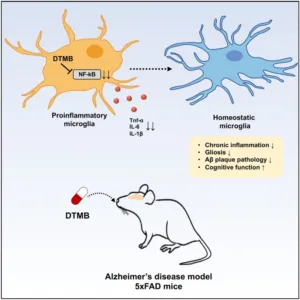
In the new study, researchers started testing a novel PPAR agonist called DTMB. This new chemical can suppress brain inflammation and thus reduce the accumulation of amyloid and tau proteins in the brain.

In their lab experiments in mice models, researchers noticed that DTMB lowers the production of proinflammatory cytokines by microglia, one of the most abundant immune cells in the brain.
It appears that reducing microglial inflammatory responses can help significantly. It can slow down or even prevent the accumulation of faulty proteins, thus stopping the chain reaction that occurs due to the accumulation of these misfolded proteins.

In the study, researchers found that feeding mice with DTMB for three months could help reverse many signs of dementia and could help improve memory and cognitive function. Further, they also found reduced levels of amyloid-beta protein. Additionally, they found significantly reduced brain inflammation.

Researchers think their study could be of significant value since developing PPAR agonists are relatively simple drugs. Furthermore, many drugs are already used in clinical practice that can influence PPAR. Additionally, many other molecules like DTMB are known to be quite good at it. Hence, researchers need to continue their studies in this direction.

It is our mission to bring real hope and transformational change to patients who would otherwise be consigned to a lifetime of medications, doctor’s visits, and suffering. We expose misaligned incentives and return the power of health to the individual. We believe empowered individuals change their communities. We use a combination of lifestyle intervention, medication management, and emerging scientific research to help our patients. When you are ready or have questions, reach out.

Medical Disclaimer: Keep in mind that the content provided is not direct medical advice for patient care, but is provided for thoughtful discussion.

Summary: For some people, fear of death may become disastrous, for example, cancer patients. However, overcoming this fear may help improve their quality of life. It appears that some people who had near-death experiences reported reduced fear of death. Now a study shows that psychedelics may also have similar kind of effects.


Humans aren’t immortal; thus, everyone would die one day. People are always looking for ways to prolong life. Some fear of death is normal. However, in some instances, excessive fear of death may cause harm.


For example, a person diagnosed with cancer may develop severe fear of death, resulting in mental health issues and a reduced lifespan. It means that excessive fear of death is bad for health, and it is something that doctors must manage. Though there are many ways to manage such a fear, like better communication, psychotherapy, and medical drugs, these methods often fail to help.


It would have been great if we had some medications that could reduce the fear of death. Especially something that works faster and combines well with psychotherapy. Now researchers think that one such option could be using psychedelics in terminally ill patients.


Researchers have noticed earlier that those who had a psychedelic experience or near-death experience reported reduced fear of death. This may have a positive impact on their mental health. It also provides them with meaning in life and has a spiritual significance. However, to date, these have been just observations, and thus researchers tried to explore this topic in a study.


Though there is no doubt that many people with near-death experiences and those using psychedelics have unusual and sometimes highly spiritual experiences, researchers wanted to understand the difference. Thus, in the study, they surveyed 3192 individuals. Out of them, 933 had a near-death experience, but they did not use any drug. Among the rest, 904 used LSD, 766 psilocybin, 282 ayahuasca, and 307 DMT. They found a significant difference in the experiences of various groups.


Those with near-death experience reported being unconscious and clinically dead, and they felt their life was in danger. However, after recovery, they reported reduced fear of death, a positive attitude, and other psychological changes. Most also reported it as a kind of spiritual experience.


Though both groups reported mystical experiences, such experiences were more intense in psychedelic users.


For non-drug users, the near-death experience was the single most important thing or experience in their lives. However, in those who used drugs, DMT and ayahuasca groups reported stronger and more persistent positive impacts compared to psilocybin and LSD groups.


These are interesting findings, as many have heard of interesting and even spiritual experiences of those who have been very close to death. Such individuals are transformed by such an experience, becoming more spiritual and positive. This may explain why many such individuals go on to live for several years after a near-death experience.


However, science shows that a similar kind of experience can be safely induced by using psychedelics.


Though more studies are needed to understand how psychedelics might be used, it shows that when used responsibly and under medical supervision, psychedelics can be quite good for managing mental health issues.


Health experts are already testing psychedelics for managing severe depression. Now, study shows that they can be suitable for those who fear death. It is quite likely that psychedelics may help those diagnosed with severe health conditions like cancer. This will enable them to enjoy their remaining days by living without fear of death.

Summary: Opioid overdose-related death is a significant problem in the US. Experts think identifying the population groups at a greater risk of opioid addiction may help counter this threat. Researchers at the University of Cincinnati analyzed the health data of Ohio state and found 12 population clusters where opioid addiction is more common. They found that white men aged 30-39 were more likely to abuse opioids, and black men aged 30-39 were at greater risk of death due to an overdose.


If we want to overcome opioid addiction, we need to identify the groups at risk and then work with them. For this, there are many tools, including the availability of big data. This is precisely what researchers at the University of Cincinnati did. They used data to understand who is at risk of opioid overdose in Ohio state. And they published the findings of their study in the journal Nature.


For the study, they analyzed the Ohio Health Department records between the years 2010 to 2017. They found that white men aged 30-39 were at high risk. Moreover, this population group was at considerable risk. The risk in men was several folds higher than in women. Similarly, they found that black men of the age were also at an elevated risk.


They also identified population clusters with a relatively higher risk of opioid addiction. They identified 12 hotspots in the state. These were mainly larger population groups or cities that were home to about 21% of the state’s population. These population clusters accounted for 40% of all opiate-related mortalities.


Researchers say that their findings are relevant in many ways. They can help guide policymakers. Not only that, but they also show the areas where agencies must focus on preventing opioid addiction. Using such data can help carry out focused efforts, like raising awareness of health hazards posed by opiate addiction, improving healthcare in those areas, and more.


As the researchers said that prevention is better than treatment. The primary purpose of the research is to find ways of reducing the risk of opioid addiction and overdose.


This data can also help scientists to understand what drives addiction in certain population groups. For example, earlier studies show that regular use of opiates reduces the production of intrinsic endorphins. Thus, a person starts feeling less excited about the daily activities and less satisfied from exercise, meeting friends, and other usual activities.
Since opiates desensitize the impact of natural endorphins, people addicted to these substances do not enjoy life as usual. Thus, they are more likely to seek pleasure in the substances. Finally, people become tolerant of opiates, and each time they need a higher dose to achieve similar results.


Researchers say that to counter this epidemic, health experts, educators, doctors, and public advocates, would need to come together and work.
They also noted other addiction patterns in the study, like those who had relatives addicted to opioids, were at a 10-time greater risk than others. However, researchers say there is still a need to better characterize those at a greater risk of opioid misuse.


Further, researchers noted that although it appears that legal opioid prescriptions contributed to this epidemic, there is more to the story. In recent years, law enforcement agencies have become stricter and even punished several doctors. However, these measures do not seem to help, as people turn to cheaper illicit drugs.


Suboxone is one of the drugs utilized to treat opioid addiction. However, the dose prescription must be kept under check.


Many of these illicit opiates, like heroin, are often laced with a cheaper and more potent synthetic drug called fentanyl. Fentanyl is a very potent drug. However, adding it to opiates significantly increases the risk of overdose. In addition, it appears that fentanyl is easier to synthesize or source.


This study has been limited to a single state. However, researchers think preparing such data for other states, or the whole nation would be even more helpful. Thus, in the near future, they want to conduct such a study for Kentucky and West Virginia.


Keeping all of the things in mind, it is better to opt for systematic, opioid addiction treatment programs.